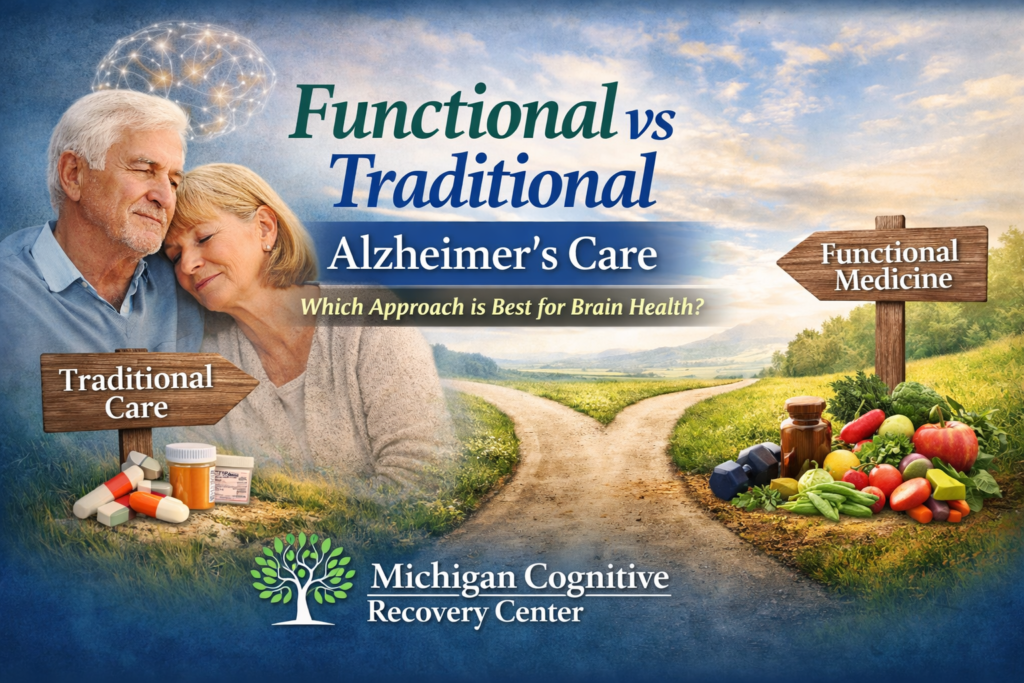
- Families facing an Alzheimer’s diagnosis often must choose between traditional care and functional medicine approaches.
- Traditional Alzheimer’s care focuses on symptom management through medication, therapy, and long-term support.
- Functional medicine Alzheimer’s care seeks to identify and address root causes such as inflammation, nutrient deficiencies, metabolic issues, and lifestyle factors.
- Personalized nutrition, lifestyle changes, and targeted supplements play a key role in functional Alzheimer’s care.
- Traditional care is widely accepted and often covered by insurance, but it may not slow underlying cognitive decline.
- Functional and traditional Alzheimer’s care can sometimes be combined to provide more comprehensive support.
Alzheimer’s disease affects the entire body, not just the brain. While traditional care helps manage symptoms and improve daily functioning, functional medicine takes a broader, root-cause approach to support long-term brain health. Understanding the strengths and limitations of both approaches allows families to make more informed care decisions.
In this article, we explore the key differences between functional and traditional Alzheimer’s care to help families choose the most supportive path forward.
When a loved one is diagnosed with Alzheimer’s disease, families often wonder what kind of care will help the most. Traditional care focuses on managing symptoms with medication and therapy. Functional medicine, on the other hand, seeks to identify the root causes of memory decline and works to repair them naturally.
At Michigan Cognitive Recovery Center, we help families understand the two paths available for Alzheimer’s care, functional versus traditional, so that they can make the best choices for their loved ones.
What Is Traditional Alzheimer’s Care?
Traditional Alzheimer’s care follows the standard medical model used by doctors and neurologists. The primary goal is to manage symptoms and slow the progression of the disease.
Common Parts of Traditional Care
1. Diagnosis and Testing: Doctors use memory tests, brain scans (like MRI or PET), and blood work to confirm Alzheimer’s and track its stage.
2. Medication Management: Drugs such as donepezil (Aricept), memantine (Namenda), or rivastigmine (Exelon) may help slow memory loss and improve daily function. However, these medications don’t stop the disease or address its underlying causes.
3. Therapy and Behavior Support: Counseling and support groups help families manage mood swings, anxiety, or agitation that often come with Alzheimer’s.
4. Lifestyle Advice: Traditional care often includes general advice, such as “eat well” or “stay active”, but it is usually not personalized.
5. Long-Term or Hospice Care: As symptoms progress, care focuses more on comfort, safety, and caregiver support.
Strengths of Traditional Care
- Backed by research and clinical trials
- Provides access to medications and specialists
- Often covered by insurance
Limitations
- Focuses on symptom control rather than prevention
- Limited attention to nutrition, toxins, or root causes
- May not stop further cognitive decline
What Is Functional Medicine?
Functional medicine Alzheimer’s care is a more personalized and holistic approach. It doesn’t just examine the brain; it assesses the entire body to identify and treat the underlying causes of memory loss.
Instead of asking, “What pill treats this?” Functional medicine asks, “Why is this happening, and how can we help the brain heal?”
How Functional Medicine Works
1. Root-Cause Testing: Practitioners look for issues such as inflammation, hormonal imbalances, poor gut health, vitamin deficiencies, or exposure to toxins.
2. Personalized Nutrition Plans: Diet plays a significant role. Plans like the MIND diet or the Bredesen Protocol emphasize whole foods to support brain function and reduce inflammation.
3. Lifestyle Changes: Functional medicine emphasizes sleep, exercise, stress reduction, and social activity, all proven to support brain health.
4. Targeted Supplements: Based on lab results, doctors may recommend natural supplements such as omega-3 fatty acids, vitamin D, B vitamins, and curcumin.
5. Toxin and Mold Detox: Hidden exposures to mold, metals, or chemicals can worsen memory decline. Gentle detoxification helps remove these triggers.
6. Cognitive Stimulation: Brain training, puzzles, and mindfulness exercises help rebuild neural connections.
Strengths of Functional Medicine
- Focuses on healing causes, not only managing symptoms
- Fully personalized for each patient
- Encourages prevention and early intervention
- Empowers families to take an active role
Limitations
- May not be fully covered by insurance
- Requires time and consistency
- More research is still ongoing, but results are promising.
Functional vs Traditional Alzheimer’s Care: Key Differences
In short, traditional care treats the disease, while functional medicine treats the person.
| Feature | Traditional Care | Functional Medicine |
| Goal | Manage symptoms | Find and fix root causes |
| Approach | One-size-fits-all | Personalized and holistic |
| Tools | Medications, therapy | Nutrition, detox, lifestyle |
| Focus | Disease control | Prevention and repair |
| Family Role | Supportive | Active and involved |
Science Says About Functional Medicine and Alzheimer’s
While there’s still no cure for Alzheimer’s, research shows that lifestyle and metabolic changes can help slow or even reverse early cognitive decline. A 2022 study in the Journal of Alzheimer’s Disease found that patients following multifactorial, functional-style programs showed improved memory and focus.
Real-Life Example: Combining Both Approaches
Meet Linda, a 69-year-old recently diagnosed with early Alzheimer’s. Her neurologist prescribed donepezil to help with memory, but the results were limited. She then worked with a functional medicine doctor who discovered she had insulin resistance, vitamin D deficiency, and high inflammation.
Final Thoughts: Building Hope in Alzheimer’s Care
The difference between functional medicine and traditional Alzheimer’s care comes down to philosophy. Conventional medicine treats symptoms; functional medicine seeks to understand the underlying causes of those symptoms.
There’s no “one-size-fits-all” answer; each person’s journey with Alzheimer’s is unique.
At the Michigan Cognitive Recovery Center, proper brain health requires a combination of modern medicine and holistic care.
Even small daily changes can make a big difference. Eat real food, move every day, sleep well, stay connected, reduce stress, and keep learning.
Traditional care focuses on managing symptoms with medication, while functional medicine looks for root causes such as inflammation, nutrient deficiencies, and lifestyle factors to support brain health.
Yes, research suggests that personalized lifestyle, nutrition, and metabolic interventions may help slow or improve early cognitive decline, though it is not a cure.